
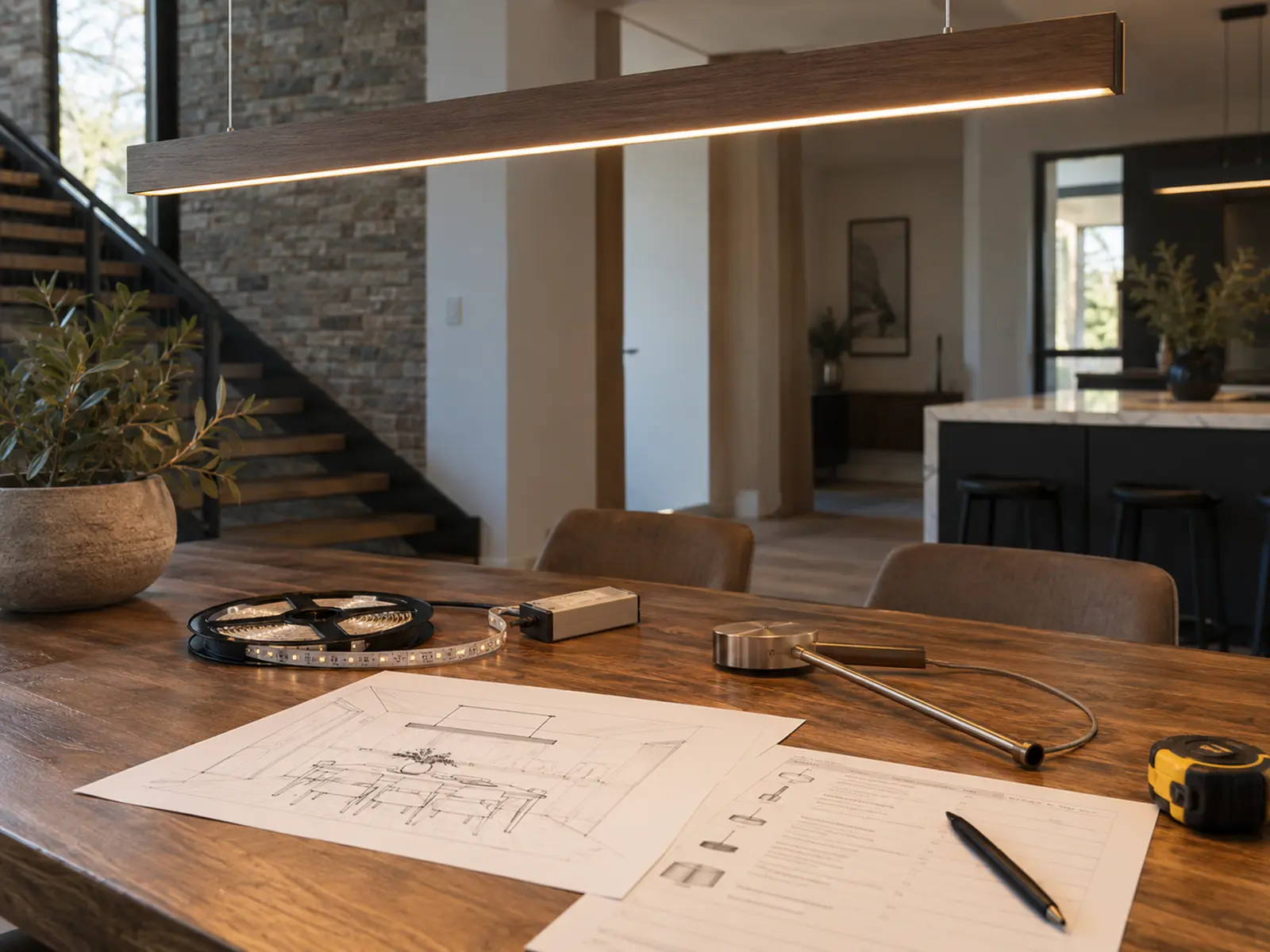
Why is one price per pot light incomplete?
A unit price cannot show whether the project uses existing wiring or a new route, whether ceiling access is open or finished, which fixture and control are supplied, whether an ESA notification is included, or who handles extra access openings and finishes.
Quantity still affects cost, but compare estimates using the same written assumptions. A lower headline can describe less work. Clear fixture information, ceiling conditions, switching, height, exterior suitability, cleanup, tax, and change rules make the comparison more useful.
Separate fixed scope from unknown conditions.
Small-room project
Setup, access, notification, and control work may represent more of the total than fixture quantity suggests.
Multi-room project
Repeated fixture types can improve coordination, but each room still needs its own layout and access review.
Finished ceiling
Concealed framing and services create routing uncertainty that should be described—not hidden.
Renovation stage
Open access can reduce uncertainty when layout and wiring are coordinated before finishes.
These factors change the work behind each light.
A useful estimate connects price to the conditions and deliverables rather than a marketing number.
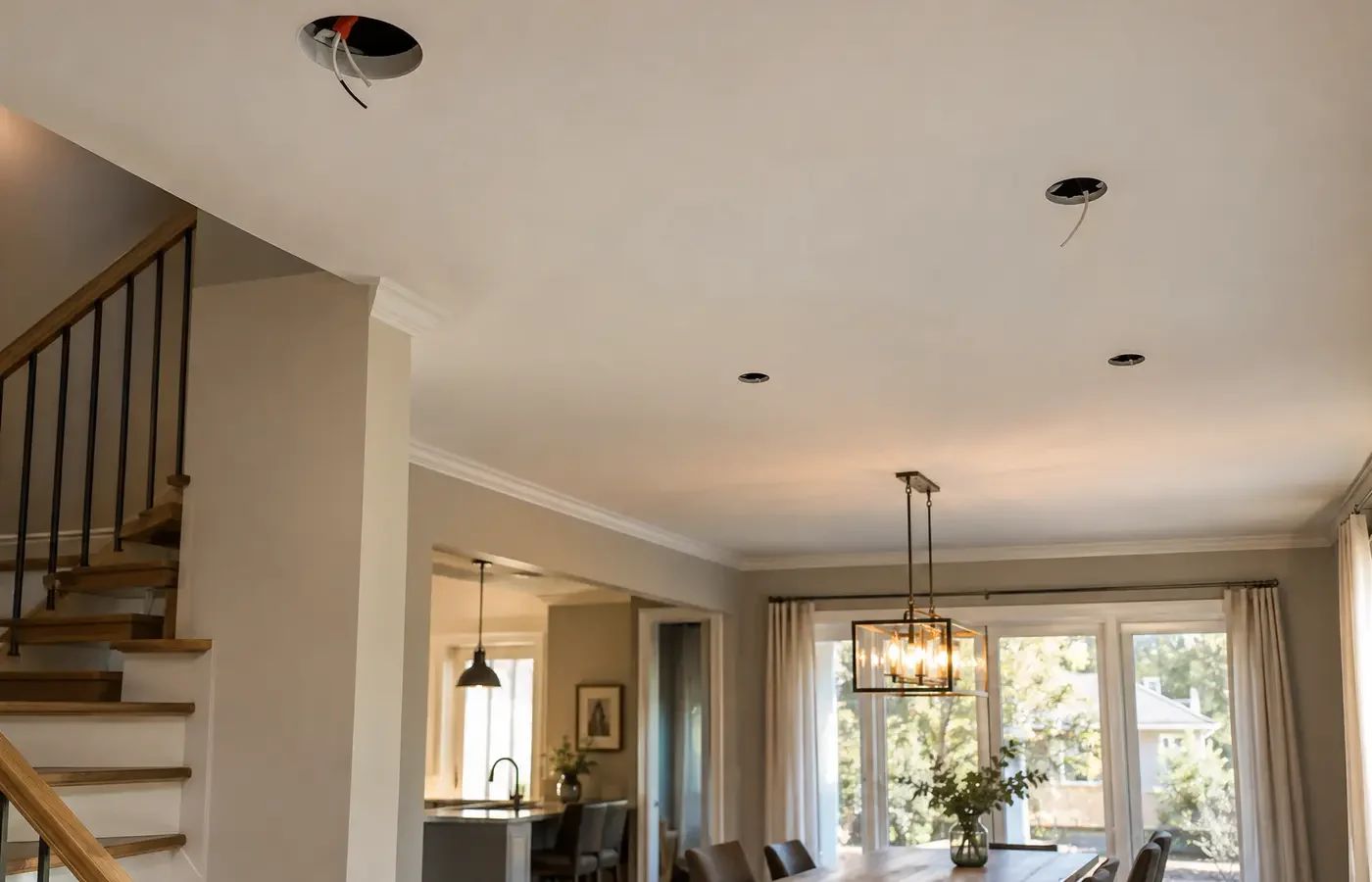
| Condition | Why it changes the plan |
|---|---|
| Fixture specification | Product quality, beam, trim, rating, driver, colour selection, and warranty source affect material scope. |
| Existing versus new wiring | A simple compatible replacement differs from adding cable, switches, or circuits. |
| Ceiling access | Attic access, open framing, between-floor ceilings, joist direction, obstacles, and finishes change routing. |
| Controls | Dimmers, smart switches, sensors, multi-location control, and new wall boxes add products and labour. |
| Height and exterior work | Access equipment, soffit material, weather suitability, and aiming affect the project. |
| Notification and finishing | ESA process, drywall access, patching, painting, cleanup, tax, and disposal need explicit treatment. |
Use an inclusions checklist to compare estimates.
Ask each proposal to answer the same questions. Anything left unstated should be clarified before treating prices as equivalent.
- Exact fixture, trim, driver, colour temperature, output, and quantity
- Layout responsibility plus field-adjustment rules when obstructions appear
- Wiring, circuit, switching, dimmers, controls, and existing-component assumptions
- Ceiling access method and responsibility for drywall, patching, painting, or soffit repair
- ESA notification and inspection responsibility plus expected documentation
- Cleanup, disposal, tax, schedule assumptions, exclusions, and change authorization
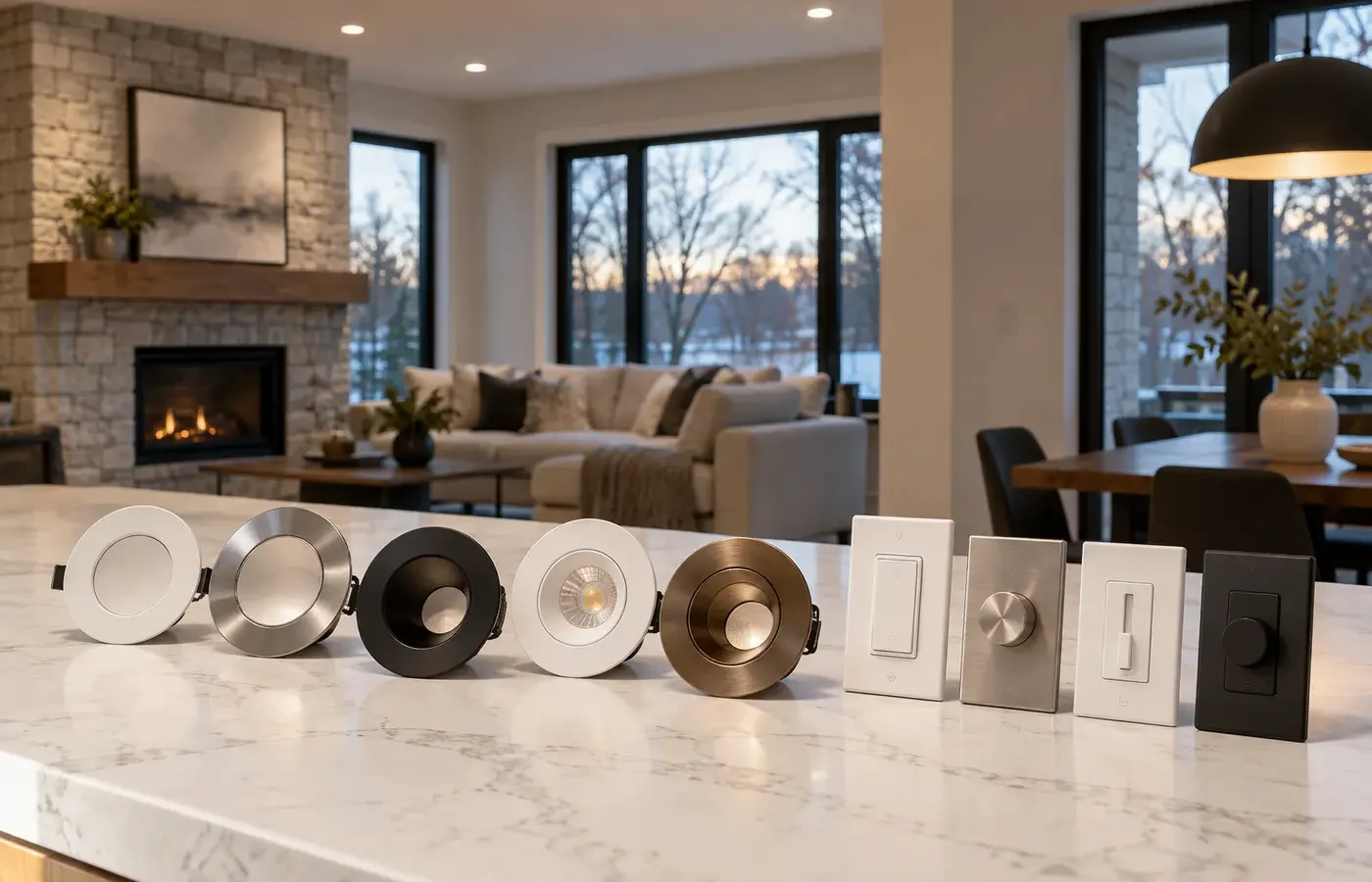
Avoid false precision before the room is understood.
Photo-based first review
Useful photographs and dimensions can narrow the initial discussion while concealed conditions remain conditional.
Site confirmation
Important when access, structural routes, height, heavy fixtures, or existing faults cannot be assessed remotely.
Written alternatives
Where useful, compare a base fixture/control scope with clearly priced upgrades instead of mixing them into one number.
Move from the goal to a confirmed scope.
Document the starting point
Begin with room size, ceiling height, and desired areas and current ceiling, fixtures, switches, and accessible spaces.
Review the conditions
Work through fixture specification, existing versus new wiring, product suitability, access, and control before fixing the scope.
Compare written inclusions
Confirm exact fixture, trim, driver, colour temperature, output, and quantity plus the access, finishing, notification, testing, and change assumptions.
Coordinate the next step
Request a Room-Based Estimate once the important unknowns and responsibilities are visible.
Treat local context as a project condition, not a keyword.
For What Shapes Pot Light Installation Cost?, a Mississauga address alone does not reveal the ceiling, wiring, structure, permissions, or access. Property type is useful because it prompts better questions about fixture specification and existing versus new wiring; the actual conditions still need confirmation.
Ontario electrical installation work offered to the public must be handled through a Licensed Electrical Contractor. ESA explains that almost all electrical work requires a notification, with limited exceptions. The responsible contractor should confirm the requirement, file when required, and provide the accepted-work documentation.
Answers before you compare the scope.
Is the fixture usually included?
Do not assume. The estimate should identify whether fixtures are supplied, the exact product or allowance, and who handles substitutions.
Are dimmers and taxes included?
Only the written proposal can answer. Ask for controls, tax, notification, cleanup, access repair, and exclusions to be stated.
Why can equal quantities have different prices?
Wiring routes, ceiling access, product, height, controls, exterior exposure, notification, and finishing scope can differ substantially.
Should I use an online calculator?
A calculator can illustrate variables, but it cannot see concealed conditions or confirm the actual work. Treat it as a rough planning tool, not a final scope.
Continue with the closest lighting decision.
Pot Light Installation
Review installation methods, fixture approaches, and finished-ceiling realities.
Explore this topic →
Layout Planning
Understand why useful quantity follows the room and fixture.
Explore this topic →
Quote Checklist
Use a detailed checklist when comparing proposals.
Explore this topic →
Tell us about the space and the result you want.
For a useful first review, provide room size, ceiling height, and desired areas, current ceiling, fixtures, switches, and accessible spaces, and the outcome you want. Add product links or close-up photographs when they clarify the existing condition.