
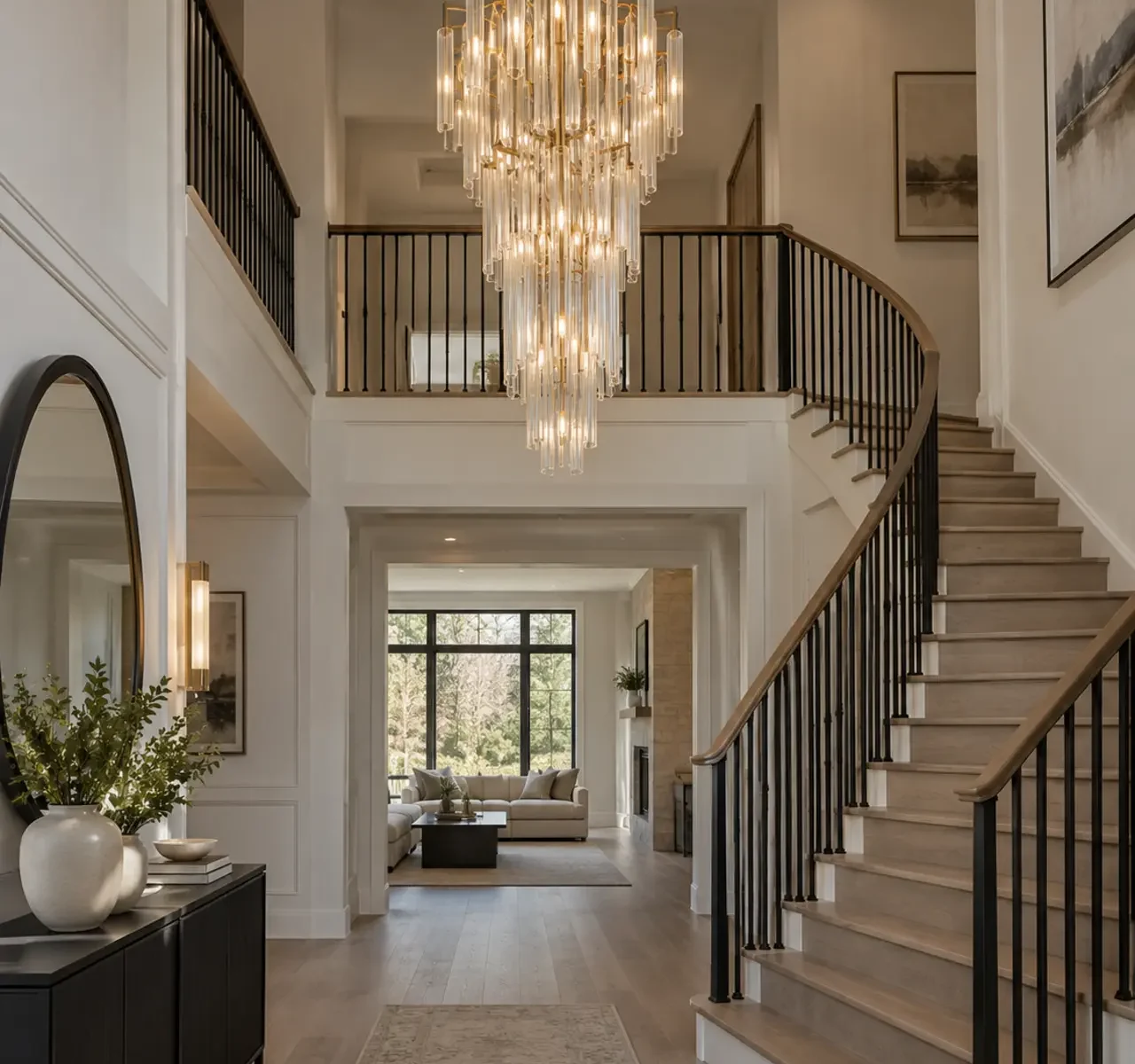
What makes high-ceiling chandelier installation different?
The fixture must be safely assembled, supported, lifted, connected, levelled, and serviceable at a location that may sit above stairs, a foyer, or finished floors. Fixture weight, canopy hardware, suspension method, ceiling slope, and outlet support should be known before access equipment is selected.
Hanging height is both visual and practical. Review the view from the entry, upper landing, adjacent rooms, and any door or circulation path. The final scope should also address removal of the old fixture, packaging, delicate components, lamp access, and control compatibility.
Resolve high-risk details before the fixture is in the foyer.
Support
Confirm the outlet box, framing, mounting system, and listed weight relationship.
Access
Match ladder, platform, scaffold, or lift planning to stairs, floors, walls, and clearances.
Assembly
Stage crystals, arms, shades, cables, chain, canopy, and fragile parts methodically.
Placement
Set scale and suspension using ceiling height, landing views, door swing, and circulation.
Height multiplies small uncertainties.
A missing mounting part or inadequate support is harder to resolve once access equipment and a fragile fixture are staged.
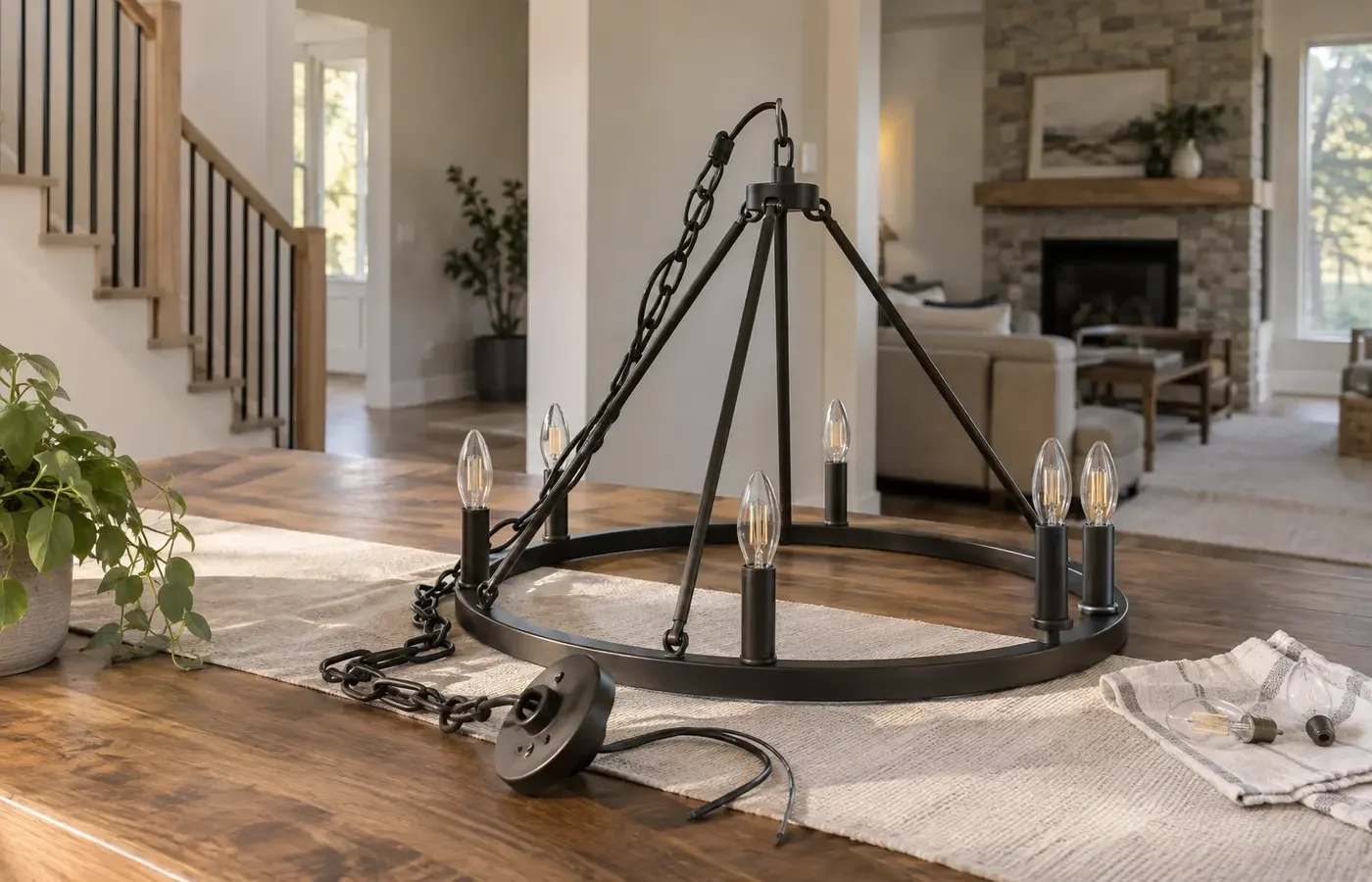
| Condition | Why it changes the plan |
|---|---|
| Weight and support | The mounting point must be suitable for the actual listed fixture weight and movement. |
| Ceiling geometry | Slope, medallions, beams, and canopy shape affect mounting and visual alignment. |
| Stair or foyer access | Changes equipment footprint, surface protection, working height, and handling. |
| Suspension range | Chain, cable, rod, or custom stem determines available height adjustment. |
| Integrated electronics | Driver location, dimming, colour, replacement access, and compatibility need review. |
| Future maintenance | Plan cleaning and lamp or driver access before the fixture becomes difficult to reach. |
Make access and assembly explicit.
A complete proposal separates electrical work from structural, specialty-access, ceiling-repair, and decorative-assembly assumptions.
- Fixture approval, instructions, complete parts, listed weight, dimensions, and suspension method
- Existing box and structural-support assumptions plus responsibility for upgrades
- Assembly extent, delicate components, spare parts, levelling, and protective staging
- Access equipment, floor and wall protection, stair conditions, and clear work area
- Existing fixture removal, relocation, disposal, canopy coverage, and finish repairs
- Compatible control, testing, notification responsibility, documentation, and tax
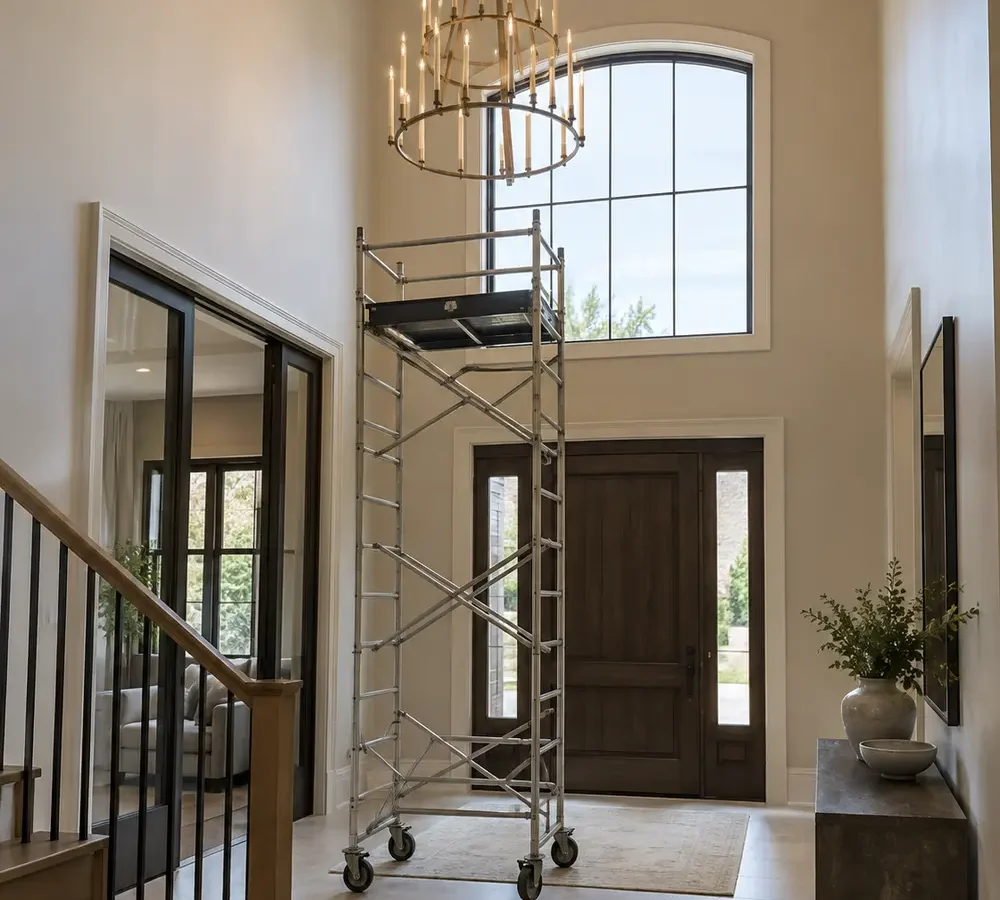
Judge placement from more than the floor below.
Lower-floor view
The chandelier should relate to the foyer volume, door, table, stair, and circulation.
Upper-landing view
Canopies, chain, lamp glare, dust-catching surfaces, and internal components may be more visible.
Nighttime control
Dimming and separate surrounding light can preserve drama without forcing the chandelier to carry all illumination.
Move from the goal to a confirmed scope.
Document the starting point
Begin with product link, instructions, dimensions, and listed weight and photos from below and from any upper landing.
Review the conditions
Work through weight and support, ceiling geometry, product suitability, access, and control before fixing the scope.
Compare written inclusions
Confirm fixture approval, instructions, complete parts, listed weight, dimensions, and suspension method plus the access, finishing, notification, testing, and change assumptions.
Coordinate the next step
Discuss the Chandelier once the important unknowns and responsibilities are visible.
Treat local context as a project condition, not a keyword.
For Chandelier & High-Ceiling Lighting, a Mississauga address alone does not reveal the ceiling, wiring, structure, permissions, or access. Property type is useful because it prompts better questions about weight and support and ceiling geometry; the actual conditions still need confirmation.
Ontario electrical installation work offered to the public must be handled through a Licensed Electrical Contractor. ESA explains that almost all electrical work requires a notification, with limited exceptions. The responsible contractor should confirm the requirement, file when required, and provide the accepted-work documentation.
Answers before you compare the scope.
How high should a foyer chandelier hang?
There is no universal height. Use fixture scale, ceiling height, entry door, stair, landing sightlines, circulation, and manufacturer requirements.
Can the existing outlet box stay?
Only after its type, attachment, condition, position, and suitability for the fixture weight are confirmed.
Can a chandelier be relocated?
Possibly. The new support, wiring route, ceiling access, canopy coverage, and old-location repair must be scoped.
What should be ready before installation?
The complete fixture, instructions, all hardware, confirmed dimensions and weight, clear access, and photographs of the ceiling and existing condition.
Continue with the closest lighting decision.
Fixture Installation
Review support, assembly, mounting, and customer-supplied products.
Explore this topic →
Dimmers & Controls
Confirm compatible control for lamps or integrated LED electronics.
Explore this topic →
Pot Light Pricing
Compare access, height, product, and finishing assumptions.
Explore this topic →
Tell us about the space and the result you want.
For a useful first review, provide product link, instructions, dimensions, and listed weight, photos from below and from any upper landing, and the outcome you want. Add product links or close-up photographs when they clarify the existing condition.