
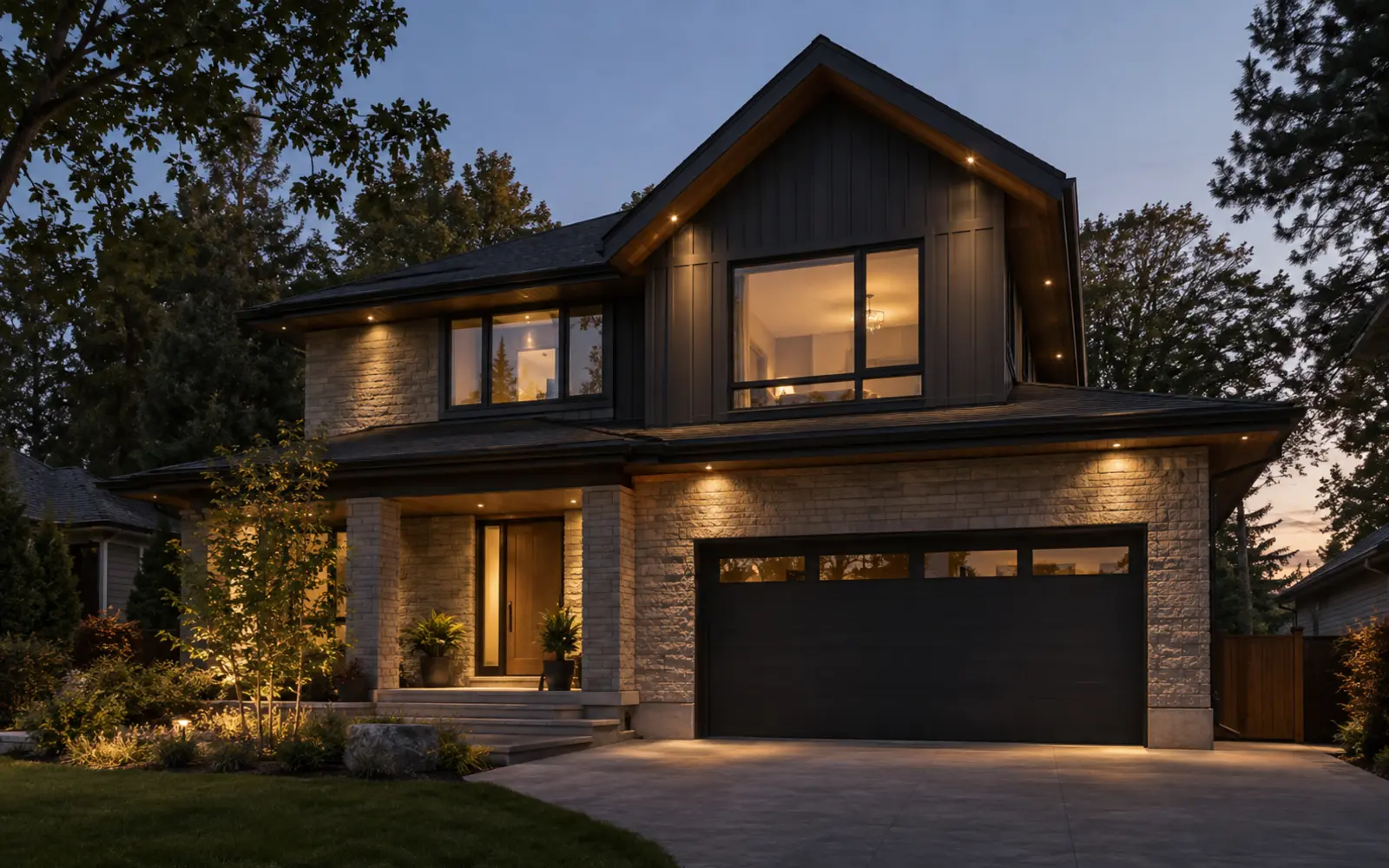
How many soffit lights are enough?
Use enough to support entrances, garage doors, architectural bays, side access, and the intended appearance—not enough to turn every roof edge into a bright dotted line. Fewer controlled fixtures often produce a calmer result.
Fixture rating, trim, beam spread, output, colour temperature, eave depth, mounting height, roofline rhythm, neighbouring windows, and controls all affect the plan. Daylight and evening photographs help reveal both the architecture and existing light spill.
Use exterior light for a defined purpose.
Entrance visibility
Light doors, locks, steps, and approach areas without placing a bright source directly in the eye.
Roofline rhythm
Relate fixture positions to bays and architecture instead of using arbitrary equal spacing.
Side-yard access
Provide controlled coverage where people walk while respecting nearby windows and property lines.
Evening appearance
Choose warm, restrained output that reveals the home without washing out every surface.
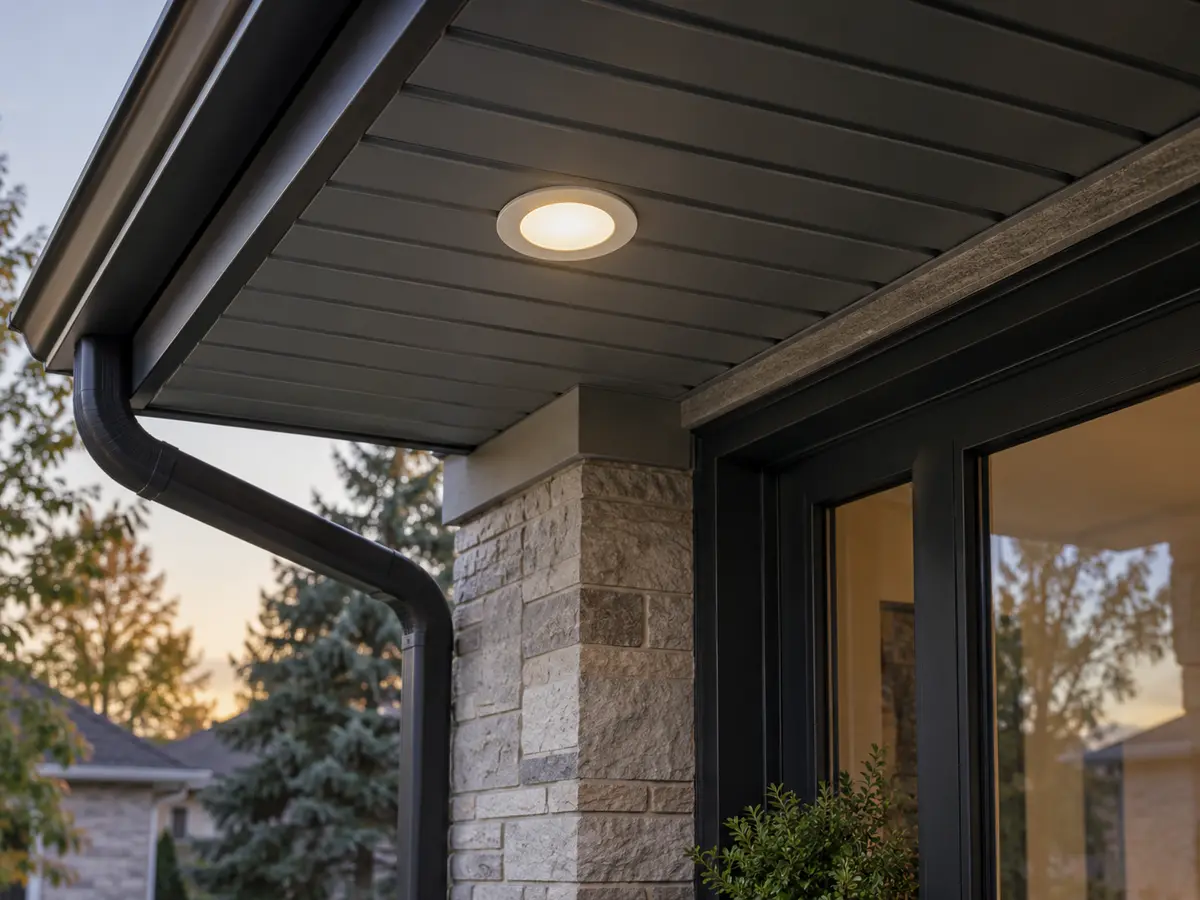
Exterior conditions change product and placement decisions.
The eave is exposed to moisture, temperature swings, service challenges, and long views from nearby properties.
| Condition | Why it changes the plan |
|---|---|
| Damp or wet exposure | The actual product rating must suit the protected or exposed location. |
| Eave depth and height | Change the pool of light, visible aperture, service access, and effective beam coverage. |
| Surface and insulation | Soffit material, cavity access, insulation, and wiring route influence installation. |
| Neighbour orientation | Nearby windows and yards should be considered before aiming or increasing output. |
| Winter conditions | Freeze-thaw, moisture, snow reflection, and accessible maintenance affect product and brightness choices. |
| Control method | Timers, photocells, sensors, and smart schedules should match the desired behaviour and wiring. |
An exterior scope should name suitability, access, and control.
Avoid comparing roofline quantity alone. Product ratings and direction are central to a safe, comfortable result.
- Fixture model, approval, damp/wet-location suitability, output, beam, trim, and colour temperature
- Exact eave areas, quantity, layout rationale, and areas deliberately left dark
- Wiring route, circuit, switch, timer, photocell, sensor, or connected control
- Access equipment, mounting height, soffit material, insulation, and service access
- Treatment of existing exterior fixtures and responsibility for surface repairs
- Notification responsibility, testing, aiming, cleanup, tax, and documentation
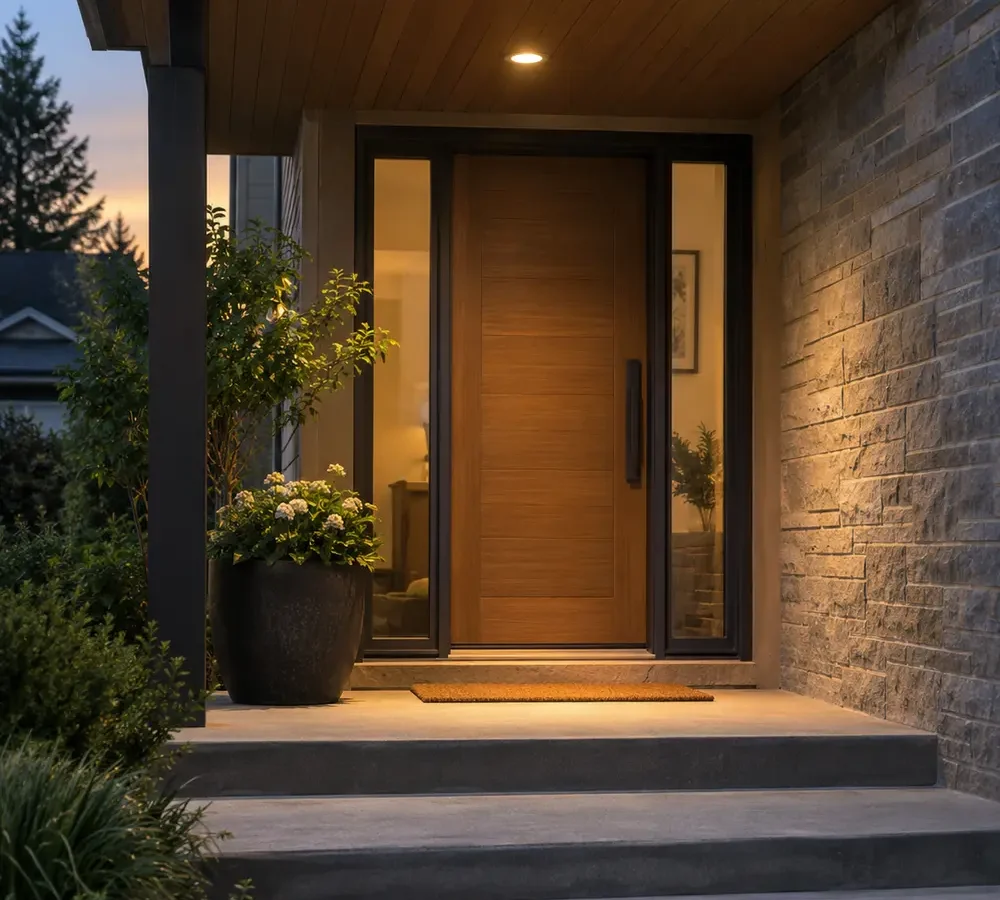
Control glare before adding output.
Beam and shielding
Keep useful light on the entrance, wall, or ground instead of in neighbouring windows or the night sky.
Warm colour
A restrained warm tone often sits more comfortably against brick, stone, siding, landscaping, and darkness.
Schedules and sensors
Use light when it is useful; avoid leaving unnecessary brightness on throughout the night.
Move from the goal to a confirmed scope.
Document the starting point
Begin with daylight photographs of each roofline or eave and evening photographs showing current lighting and neighbours.
Review the conditions
Work through damp or wet exposure, eave depth and height, product suitability, access, and control before fixing the scope.
Compare written inclusions
Confirm fixture model, approval, damp/wet-location suitability, output, beam, trim, and colour temperature plus the access, finishing, notification, testing, and change assumptions.
Coordinate the next step
Plan Exterior Lighting once the important unknowns and responsibilities are visible.
Mississauga specifically regulates nuisance lighting.
The City of Mississauga says exterior lights should not shine directly into another property. Placement, aiming, shielding, and output should be considered from the neighbouring viewpoint—not only from the driveway. See the City property-standards guidance and Nuisance Lighting By-law.
Exterior electrical work also needs products suitable for the actual location and an authorized contractor. Confirm notification and inspection requirements for the project.
Answers before you compare the scope.
Can soffit lights face a neighbour?
The light should be planned to remain useful on the property. Mississauga says exterior lights should not shine directly into another property.
Should exterior pot lights be warm or cool?
Warm light is often more comfortable residentially, but materials, existing fixtures, desired appearance, output, and camera needs should be considered together.
What rating does an exterior fixture need?
Use a product approved for use in Ontario and specifically suitable for the actual damp or wet exposure. Confirm the label and installation instructions.
Should soffit lights stay on all night?
Not automatically. Timers, photocells, motion response, and smart schedules can reduce unnecessary light while preserving useful coverage.
Continue with the closest lighting decision.
Tell us about the space and the result you want.
For a useful first review, provide daylight photographs of each roofline or eave, evening photographs showing current lighting and neighbours, and the outcome you want. Add product links or close-up photographs when they clarify the existing condition.