
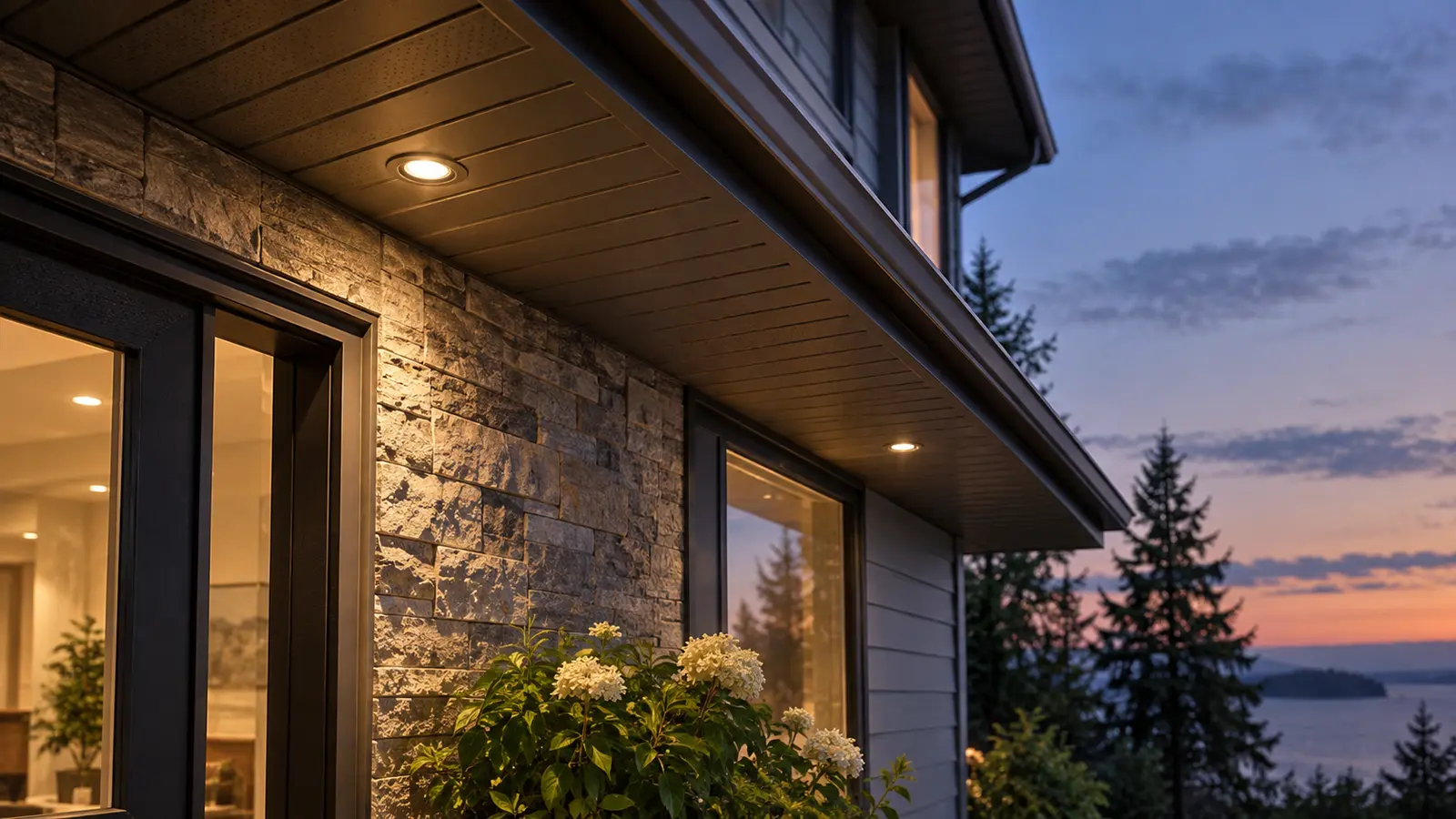
Good soffit lighting uses controlled, weather-suitable fixtures to support entrances, garages, side access, and selected roofline bays. More lights are not automatically better: spacing, output, beam, aiming, and neighbouring windows determine whether the result feels restrained or intrusive.
Plan the elevation in daylight and review it again after dark. Daylight shows soffit material, bays, roof changes, access, and neighbouring orientation; evening views show existing glare, dark approaches, reflected snow or paving, and property spill.
Mississauga says exterior lights should not shine directly into another property. The rule belongs in the layout discussion before openings are cut—not as an afterthought once fixtures are already aimed.
The short checklist
- Photograph each elevation in daylight and after dark
- Mark entrances, garage doors, steps, side paths, cameras, and property lines
- Choose products approved for use in Ontario and suitable for the actual exposure
- Compare warm colour, output, beam, shielding, and visible aperture
- Plan switch, timer, photocell, sensor, or connected schedule
- Review the result from neighbouring viewpoints and adjust after dark
Build a roofline rhythm instead of filling every gap
Architectural bays, garage doors, entrances, corners, and roof changes provide stronger references than a fixed distance repeated blindly. Some sections may be better left dark to preserve contrast.
Sparse, consistent positions can read more intentionally than a dense row of bright dots. Review the elevation as a whole, including existing sconces and landscape lights.
- Use entrances and architectural bays as anchors
- Avoid clustering where rooflines change
- Do not assume all four elevations need equal treatment
Control brightness, beam, and visible glare
A fixture can produce useful ground or wall light without showing an uncomfortable bright aperture. Mounting height, eave depth, beam, shielding, trim, and output all affect that balance.
Snow, pale paving, light siding, and wet surfaces can increase perceived brightness. Start conservatively and use appropriate control instead of relying on maximum output.
- Aim or shield toward the intended surface
- Review brightness from the street and adjacent windows
- Avoid cool, high-output light as a substitute for planning
Use a product suited to the location
A soffit may be damp or directly exposed depending on construction and weather. Verify the product approval and exact damp- or wet-location suitability from the label and instructions.
Temperature range, seals, driver location, insulation relationship, mounting orientation, and service access also belong in product selection.
- Do not infer exterior suitability from appearance
- Keep driver or junction components serviceable
- Use instructions for orientation and clearances
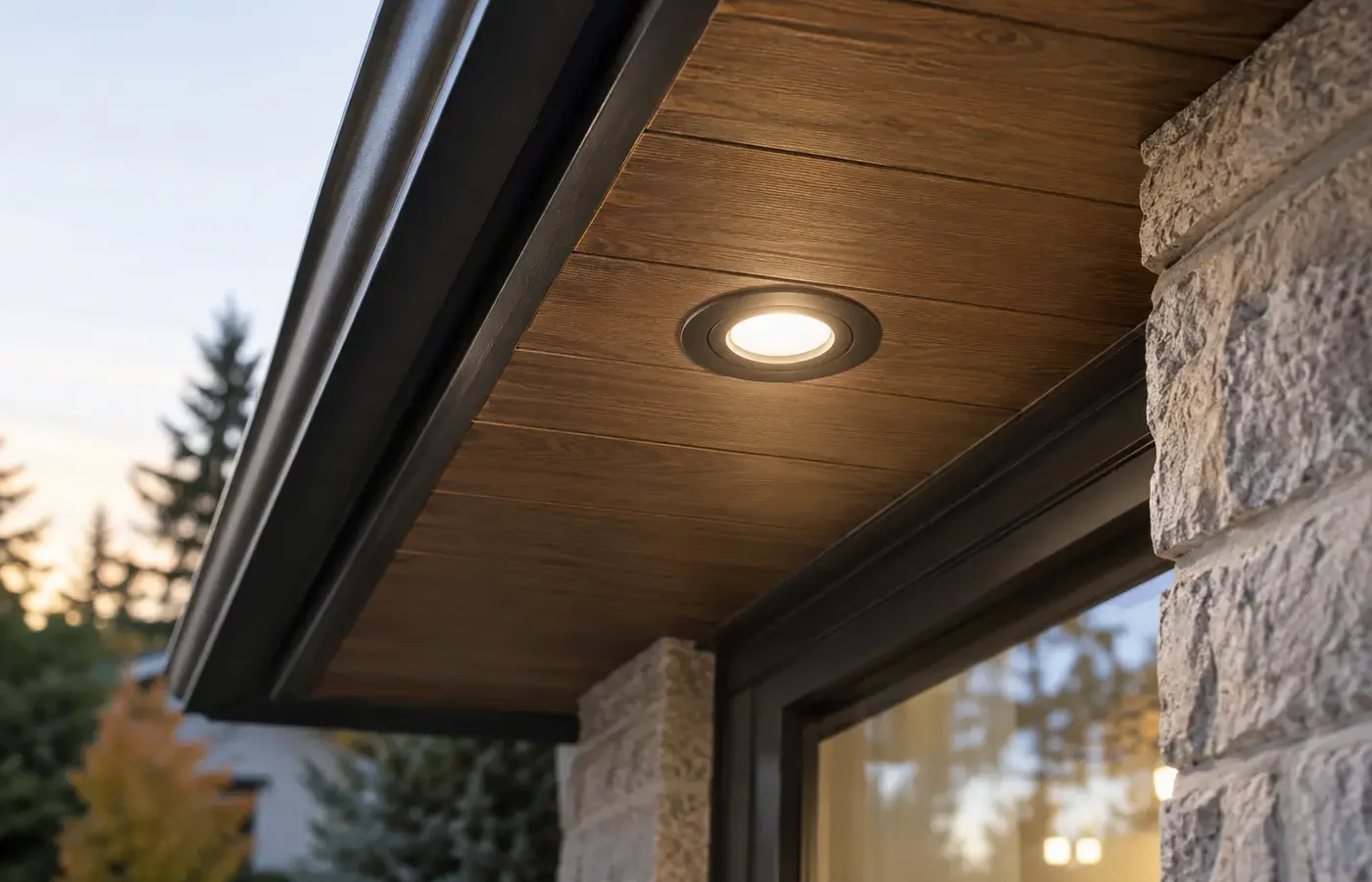
Choose a warm colour deliberately
Warm exterior light often sits more comfortably against brick, stone, siding, landscaping, and the dark sky. The chosen Kelvin value should also coordinate with sconces, garage fixtures, and interior light visible through windows.
Cameras may have their own infrared or illumination requirements. Do not over-light the whole property merely to solve one camera view without testing the actual need.
- Coordinate visible exterior fixture families
- Check how materials render after dark
- Avoid accidental mixtures across one elevation
Use timing and sensors to reduce unnecessary light
A photocell can turn light on at dusk, while a timer or smart schedule can reduce it later. Motion response may suit selected access areas when sensitivity and duration are controlled.
Plan a straightforward manual override so the homeowner is not dependent on an app or cloud service for basic exterior lighting.
- Define the desired dusk, late-night, and motion behaviour
- Prevent overlapping controls from fighting each other
- Confirm what happens after a power or network interruption
Apply Mississauga’s nuisance-lighting rule
The City states that exterior lights should not shine directly into another property. Review fixture direction, output, shielding, and the height and orientation of neighbouring windows.
The best time to solve light trespass is during layout and aiming. Keep a nighttime adjustment step in the scope so the installed result can be observed under real conditions.
- Keep light on the intended property surface
- Use shields and lower output where appropriate
- Document the final aiming or control settings
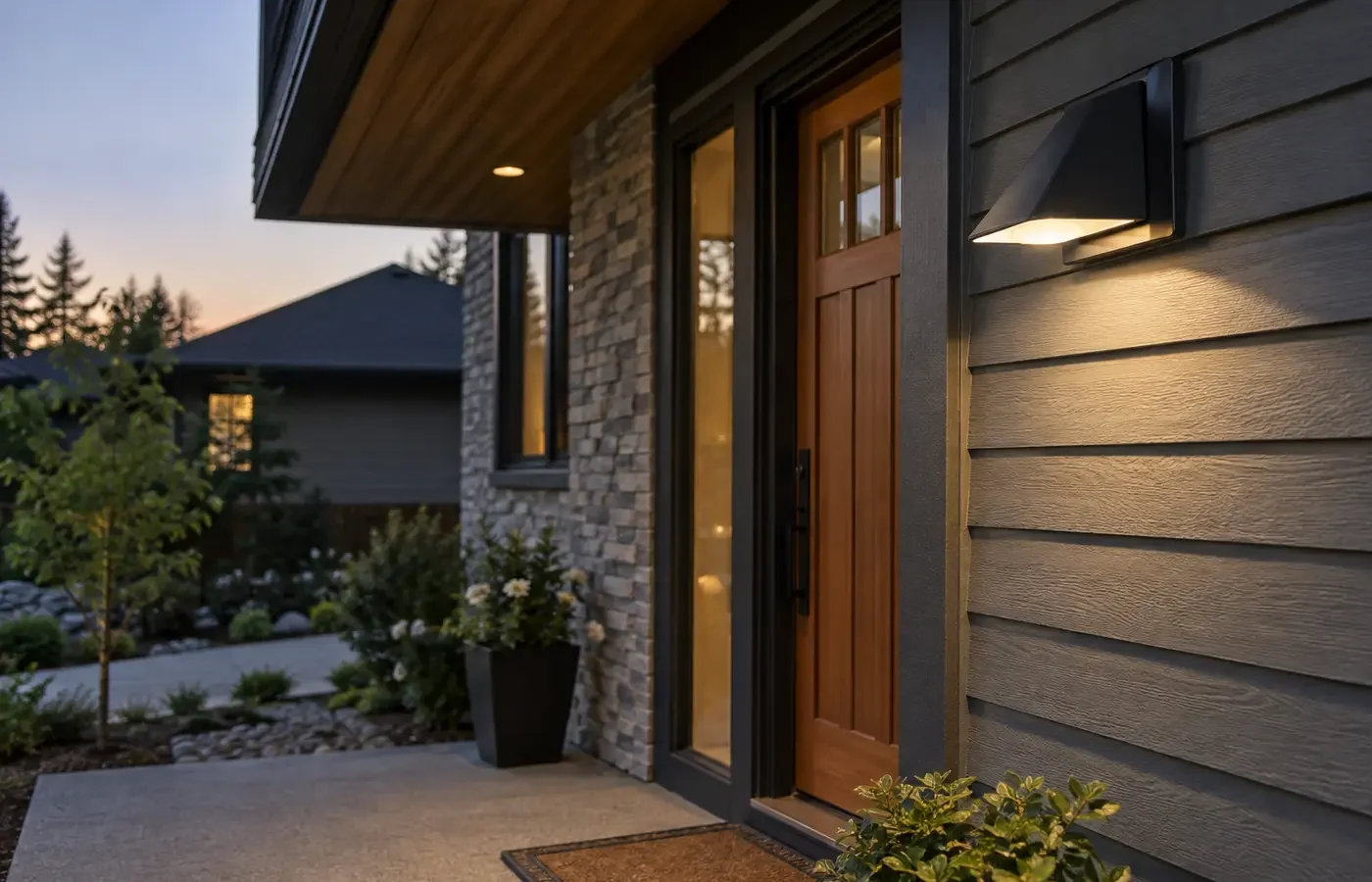
Review the installation after dark
Daylight layout decisions need a nighttime commissioning step. Stand at the driveway, front walk, entrance, side yard, street, and any nearby window or property edge. Look for exposed bright apertures, uneven roofline rhythm, light that misses the intended surface, and output that appears harsher after the surrounding area becomes dark.
Check each control state as well: dusk-on, late-night reduction, motion response, manual override, and recovery after a power interruption. One control should not accidentally defeat another or leave the homeowner dependent on an app for basic operation.
Adjust aiming or output before treating the work as complete. Photograph the final setting and record selectable colour or brightness choices so a future replacement does not introduce a visibly different fixture. The goal is useful coverage with deliberate darkness—not maximum illumination.
- Inspect from the neighbour-facing side, not only from the front door
- Test wet paving or snow-bright conditions when seasonally possible
- Confirm timers and sensors under real darkness
- Leave a record of final settings and product details
Questions to confirm for the actual project
How many soffit lights should a house have?
Use architectural bays, target areas, fixture output, beam, mounting height, and desired contrast. There is no useful universal count.
Can soffit lights point toward a neighbour?
The plan should keep light on the property. Mississauga says exterior lights should not shine directly into another property.
What colour is best outside?
Warm light is often comfortable residentially, but materials, existing fixtures, camera needs, output, and preference should be considered together.
Should they run all night?
Only if there is a clear need. Timers, photocells, motion response, and schedules can reduce unnecessary light.
General planning guidance cannot identify concealed conditions or replace a project-specific assessment. Electrical installation work in Ontario must follow the applicable requirements and be offered by an authorized business.
Want to discuss the room or lighting issue?
Share the room, ceiling, exterior area, or fixture you want to improve. Photos and approximate dimensions are useful, but you do not need every technical detail before getting in touch.