
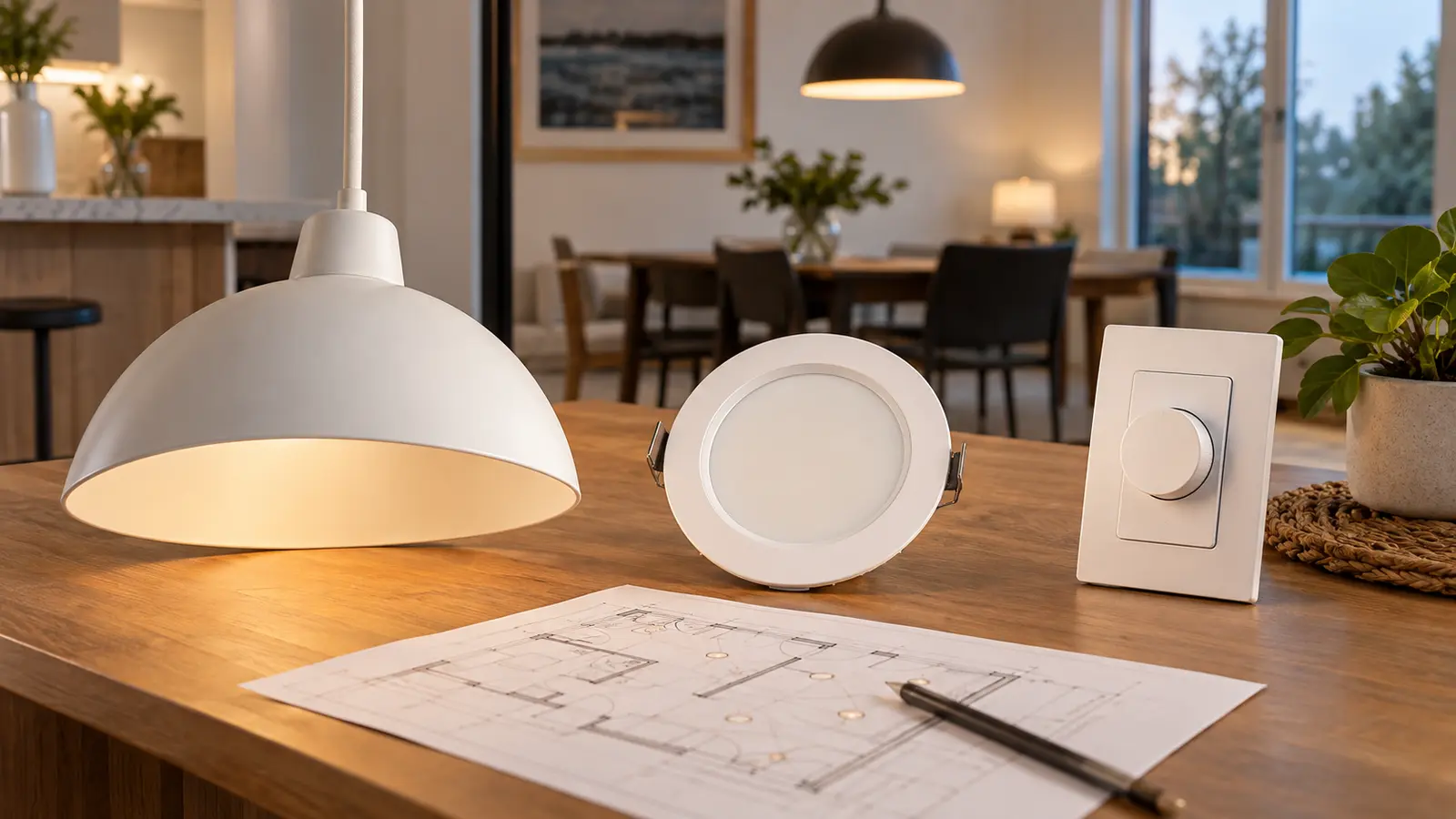
A pot-light installation quote should identify the fixture and quantity, layout responsibility, wiring and controls, ceiling-access assumptions, electrical-notification responsibility, testing and cleanup, drywall or painting boundaries, tax, exclusions, and how hidden conditions or changes will be approved.
A price per light is easy to compare only when every provider means the same thing. One number may include a specific fixture, dimmer, notification, and cleanup; another may assume existing wiring, exclude tax, and leave all ceiling repair to the homeowner.
Ask for enough product and scope detail that a substitution or field change can be discussed against a known baseline. The goal is not paperwork for its own sake—it is preventing two different jobs from being treated as equal.
The short checklist
- Exact fixture or allowance, quantity, trim, Kelvin, output, beam, rating, and approval
- Room layout and responsibility for field adjustments
- Existing or new wiring, circuits, switches, dimmers, and controls
- Ceiling access plus drywall, texture, primer, paint, and soffit-repair boundaries
- ESA notification, inspection, Certificate of Acceptance, testing, and documentation
- Cleanup, disposal, tax, schedule assumptions, exclusions, warranty wording, and change process
Identify the fixture, not only “LED pot light”
The quote should name the manufacturer and model or provide a clear allowance and minimum specification. Include aperture or trim, beam, output, colour temperature, CRI where relevant, dimming, driver, and location suitability.
For exterior, bathroom, insulated, or other special conditions, the actual product instructions and ratings matter. A generic description cannot show whether a substitution is equivalent.
- Record model and selectable settings
- Confirm approval or evaluation mark
- Keep product documents for future matching
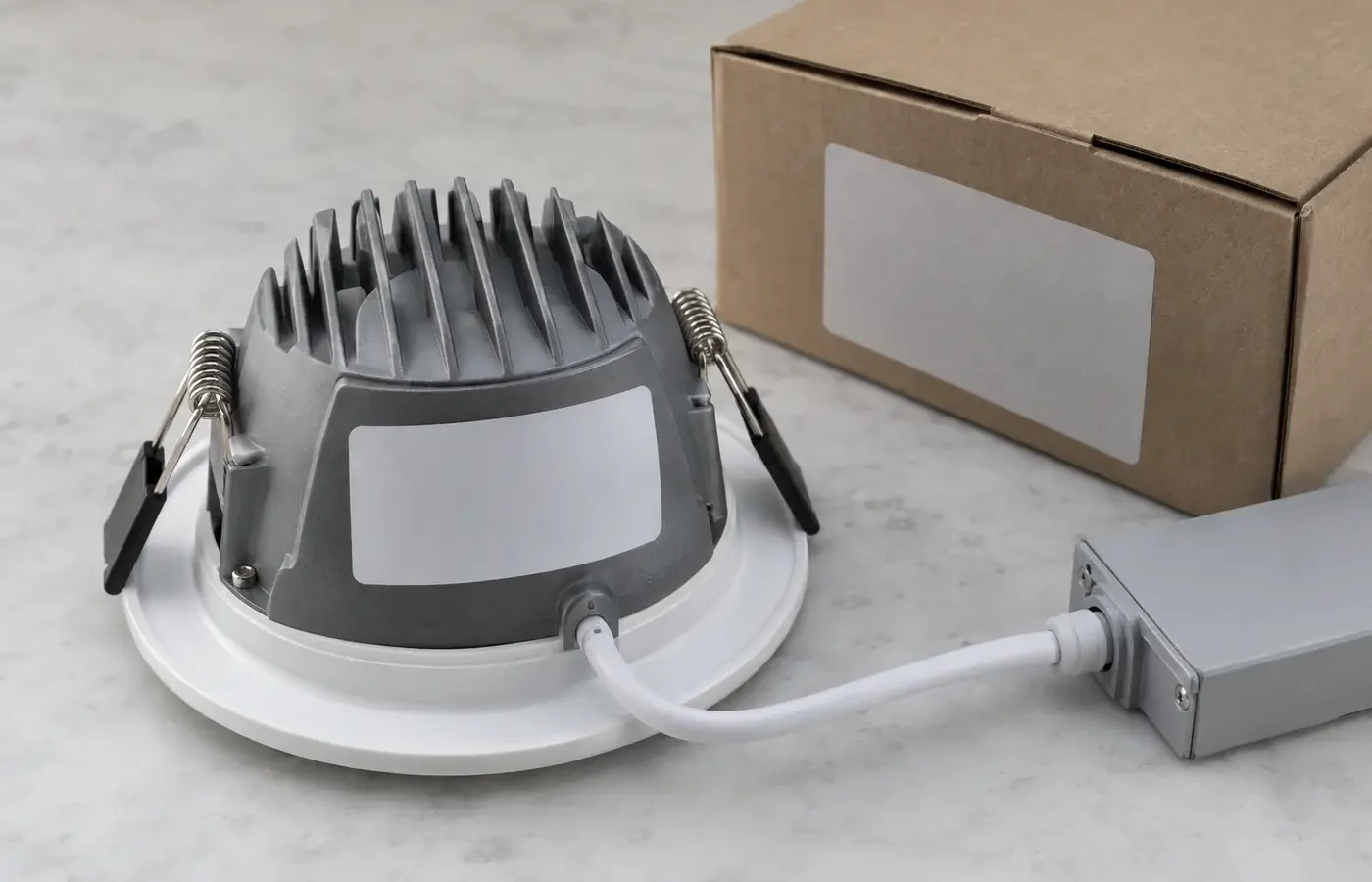
Define quantity, layout, and field adjustment
State who develops or approves the layout and which room features it is designed around. If concealed obstructions require movement, define how important alignments and task targets will be preserved.
A fixture count without positions can change significantly in meaning. Ask whether the price assumes a final drawing, on-site marking, or installer discretion.
- Identify room and zone quantities
- Mark critical counters, walls, furniture, and features
- Agree on the change process before extra work
Separate existing wiring from new work
A replacement on sound existing wiring differs from adding cable, switches, circuits, junctions, or multi-location control. The quote should state what is assumed and what requires confirmation.
Dimmers and smart controls need product compatibility, load, wall-box, neutral, and wiring information. Avoid accepting “dimmer included” without knowing the device and intended behaviour.
- List circuits and new control points
- Identify included dimmer or switch models
- Clarify smart setup and account responsibility
Write the ceiling-access and finishing boundary
Finished ceilings conceal joists, ducts, pipes, blocking, insulation, and previous work. A quote should explain the expected route and distinguish fixture openings from extra access holes.
State whether patching, texture repair, sanding, primer, paint matching, soffit repair, and furniture or floor protection are included or excluded. “Minor patching” is not specific enough.
- Photograph pre-existing conditions
- Name the responsible trade for repairs
- Use written authorization for unexpected access

Confirm the Ontario electrical process
ESA says Licensed Electrical Contractors are the businesses authorized to offer electrical work to the public. Ask for the ECRA/ESA licence number and verify it through the official source.
ESA also says almost all electrical work requires a notification, with limited exceptions. The quote should state who files it, whether its cost is included, and what accepted-work documentation the customer receives.
- Verify the responsible Licensed Electrical Contractor
- Distinguish ESA notification from a municipal building permit
- Retain the Certificate of Acceptance for accepted notified work
Finish with testing, cleanup, tax, and changes
Testing should cover every fixture, control location, dimming range, schedule, sensor, and visible colour setting. The scope should identify packaging and old-product disposal plus basic site cleanup.
Confirm whether tax is included, what schedule assumptions apply, which conditions are excluded, and how additional work is priced and authorized. Any warranty language should be exact and tied to the responsible party.
- Test the full dimming range and all control points
- Check that selectable settings match
- Do not rely on verbal exclusions or warranty promises
How to compare two written quotes
Place the proposals side by side and normalize the scope before comparing totals. One quote may identify a fixture model and include compatible dimmers, notification, tax, and cleanup; another may use a generic fixture allowance, assume existing switching, and exclude ceiling repair. Write each difference into the same checklist instead of assuming a blank means included.
Next, separate fixed inclusions from conditional items. Finished-ceiling access, hidden obstacles, inadequate support, damaged wiring, or a requested layout change may legitimately alter the work. A better quote explains how those conditions will be documented and authorized rather than pretending they cannot occur.
Finally, verify the responsible business and records. Confirm the Licensed Electrical Contractor for work offered to the public, the notification responsibility when required, and the documentation delivered after accepted notified work. Product and workmanship warranty language should name the responsible party and exact terms rather than rely on a vague badge.
- Normalize products, controls, access, notification, tax, and finishing
- Circle every unstated assumption and ask for clarification
- Distinguish optional upgrades from required work
- Keep the final scope, approved changes, invoice, and accepted-work documents together
Questions to confirm for the actual project
Is price per light enough?
No. It does not define the product, wiring, control, access, notification, finishing, tax, cleanup, or change process.
Who files the ESA notification?
When a Licensed Electrical Contractor performs work requiring notification, ESA says that contractor files it. Confirm the actual scope and inclusion.
Should drywall repair be included?
It can be included or separate. The important point is to define fixture openings, extra access, patching, primer, texture, and paint responsibilities clearly.
What records should be kept?
Keep the written agreement, approved changes, fixture and control details, licence information, invoices, and accepted-work documentation.
General planning guidance cannot identify concealed conditions or replace a project-specific assessment. Electrical installation work in Ontario must follow the applicable requirements and be offered by an authorized business.
Want to discuss the room or lighting issue?
Share the room, ceiling, exterior area, or fixture you want to improve. Photos and approximate dimensions are useful, but you do not need every technical detail before getting in touch.